CASE STUDY
Mobile + IoTBoseh Bike Sharing
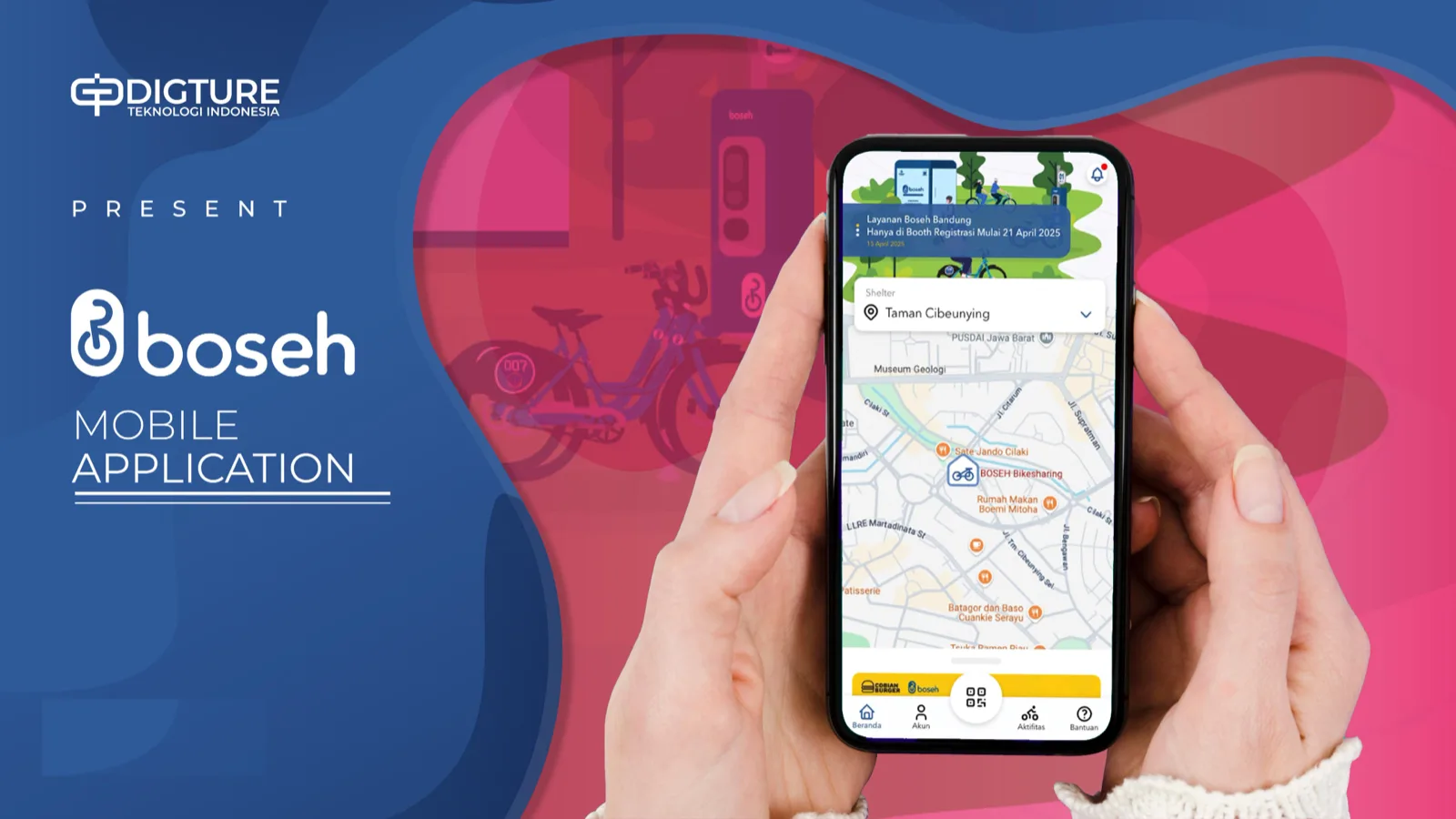
Bandung's public bike sharing system — a customer app, a staff operations app and an IoT module in every dock, built from the ground up as one interlocking chain.

The problem
Public bike schemes fail less because of a bad app than because the chain breaks: riders cannot tell which bike is really available, docks do not report their own state, and field officers have no tool to clear the cases that get stuck.
The approach
One source of truth: a bike's status is decided by the dock, not by a button in the app. The customer app stays as simple as possible, and every deviation is routed to the staff app as a clear piece of work.
The build
Digture built it from the base up: UI/UX design, two Flutter apps, a Laravel backend, and the per-shelter and per-dock PCB modules designed and programmed by the IoT team.
Customer flow
Ten screens, from signing in to the transaction receipt. The happy path is deliberately short: pick a shelter, pick a bike, unlock, ride, return.
Staff operations
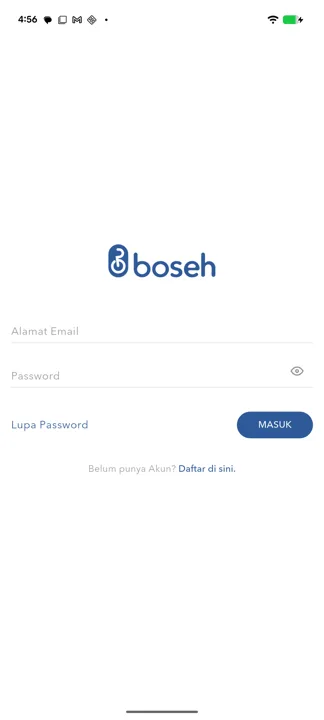
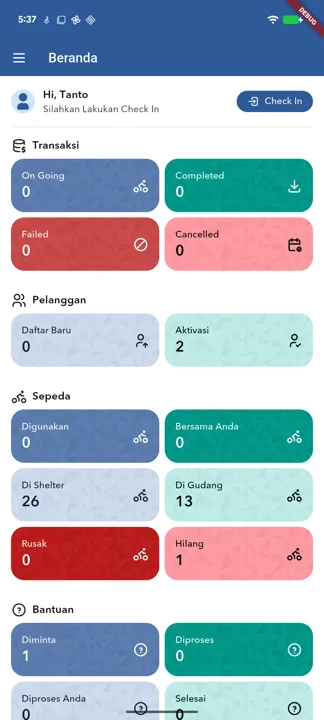
The shelter officer's app: shift check-in, fleet condition, customer activation and support tickets worked through until the transaction closes — including the cases that must be settled by hand in the field.
Architecture
Four layers that must agree before a bike changes hands. The dock has the final say: if it does not report the bike back in, the transaction does not close.
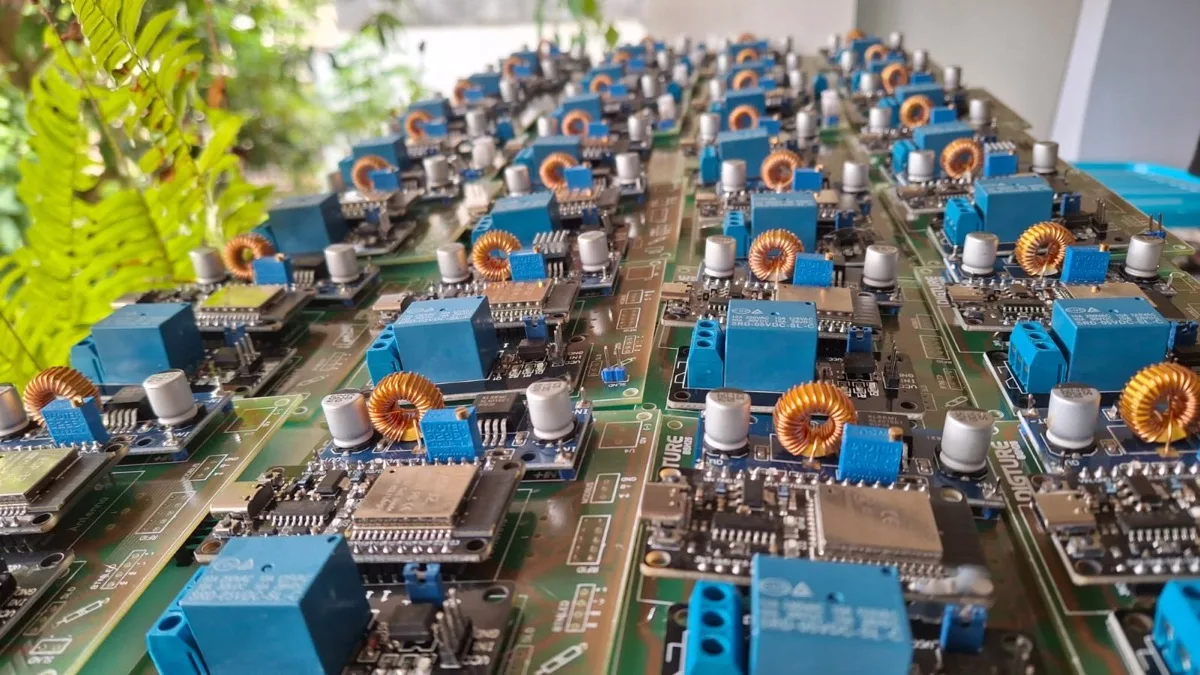
A batch of dock control boards designed, assembled and programmed in-house by Digture's IoT team — lock relays, power step-downs and an ESP module reporting status back to the backend. One board per dock across 20 shelters.
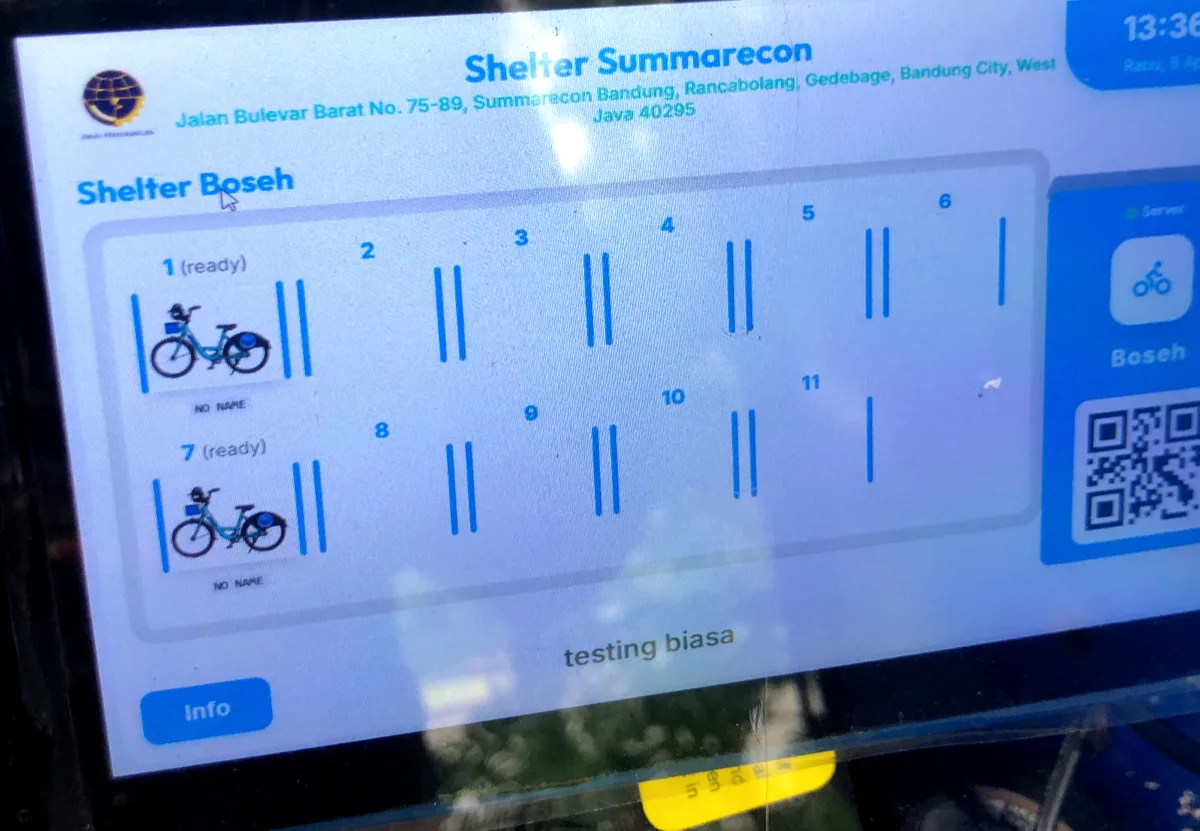
The information display at every shelter: site name and address, the state of each dock (ready, occupied, empty), a server connection indicator, and a QR code to open the app — read straight from that shelter's dock modules.
Customer app (Flutter)
Shelter map, dock selection, time-boxed unlock, ride history and help centre. Every status is pulled from the backend — no local decisions.
Staff app (Flutter)
Shift check-in, per-shelter fleet condition, customer activation, manual release, and support tickets worked until the transaction closes.
Backend (Laravel)
The source of truth for transactions, fares, bike status and tickets. It bridges app commands with device reports and keeps an audit trail of every bike movement.
IoT modules (shelter & dock PCBs)
A control board per shelter with keypad and LCD for service mode, plus a lock module per dock. A dock reporting the bike back in is the only reason a transaction may close.
Results
A chain that cannot be fooled
A transaction only closes when the dock agrees. A lost or stuck bike becomes a case with an owner, not a discrepancy in a number.
Officers have a way out
Every rider-side failure has a matching action in the staff app: release manually, return to staff, or close with a note.
The field gets a voice
Photo evidence on support tickets speeds up dock module repairs without sending a technician to look first.
Ready to replicate
The same shelter-dock-module pattern runs at 20 locations, so a new shelter is a matter of installation and data entry.